Artist/Writer: Tillie Walden
Publisher: Liminal 11/Sterling Ethos
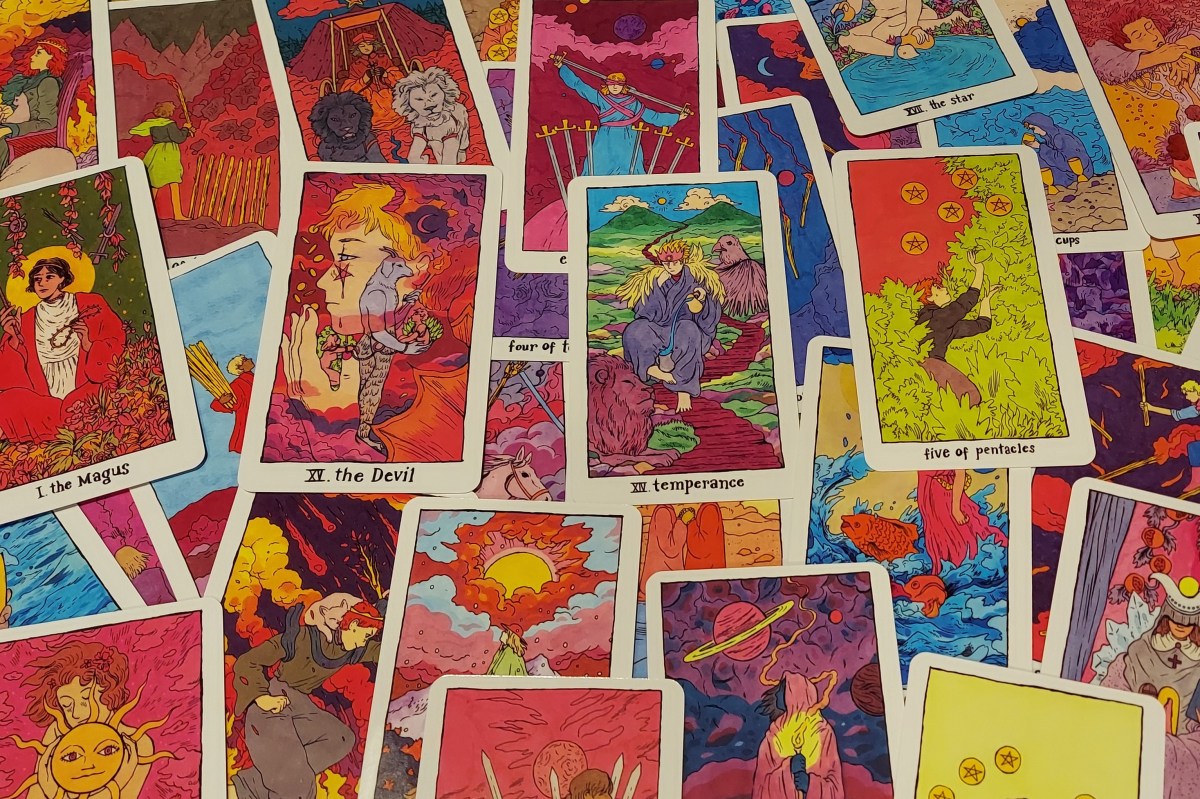
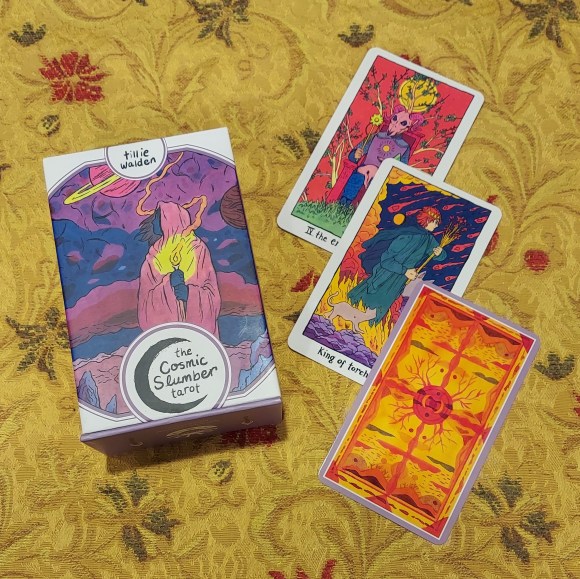
As always, I am a sucker for good packaging, and Liminal 11 does another fine job with Tillie Walden’s The Cosmic Slumber Tarot. Liminal 11 decks generally come in a very nicely made box with magnetic closures. The boxes protect the cards well and sit nicely on a shelf. Liminal 11 boxes also showcase the art of the deck. As for the quality of the cards, Liminal 11 has a reputation at this point, a good one. The cards are well made, of a good card stock, and have a minimal shininess that doesn’t detract at all from the images. In spite of the publisher’s pedigree, I was truly on the fence about this deck even after watching a couple of walkthroughs. On any other day, I would say that the artwork doesn’t appeal to me, but when I looked at the interesting interpretation of the Lovers and the Devil on each side of the box, both radiating in their groovy, mid-Seventies rock-poster color palette, I couldn’t wait to get this deck. Now, I’m glad that I have it, but not for the reasons I was expecting.
Over the last few months, I admit that I have been dealing with a kind of burnout. While my personal life is fine, the rest of the world seems…off, overwhelming. With the contentious political climate, war raging in eastern Europe, rising costs associated with inflation, energy and fuel costs, material shortages, and what I see as the inevitable collapse of public education (K-12 and higher) in the United States, my cheery outlook—which was not particularly cheery to begin with—has been whetted upon a stone of ennui until I fear that I have developed a rather hard edge, a still reluctant but ever firmer impatience with so many things. And then I opened The Cosmic Slumber Tarot.
On first glance, I like the cards. Individually, they are lovely, and as an oeuvre, they flow in peaceful consistency. The art is soft and comforting in a manner that I did not expect. Tillie Walden’s art reminds one of early twenty-first-century anime masterpieces such as Spirited Away (2001) and Howl’s Moving Castle (2004), except that there is a fleshy, tactile quality that I hadn’t expected. For example, the Star of The Cosmic Slumber Tarot delights me because Walden’s Star is a real woman who radiates comfort and tranquility. What I keep repeating is this: this deck was a pleasant surprise exactly when I needed a pleasant surprise. I have already mentioned the color palette, an early morning neon that is completely in-line with the theme of the deck, but I must also address the line quality of the cards, which, although somewhat inconsistent, still enthralls me as it wraps around these images. Even the font used to title the cards creates the satisfying illusion of legible hand-lettering that perfectly suits the slightly rough feel of the deck.
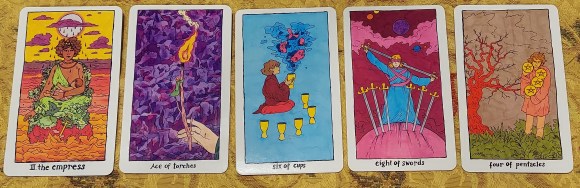
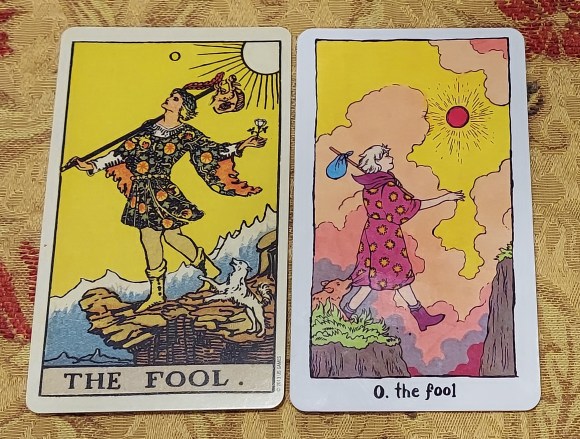
The cards follow a generally recognizable Rider-Waite-Smith (RWS) pattern with some nice variations here and there. Trumps like Temperance (with its alchemical menagerie) and The Universe (as opposed to The World) suggest that Walden at least flipped through Crowley’s Thoth while creating her deck, but Walden’s interpretation, visually and verbally, of the cards is what makes the deck shine. Her specific touches throughout the cards stand out in the best way. In the Trumps, The High Priestess opens a small door in her own torso allowing a smaller version of herself to search within. The towers beneath the crying Moon are mountainous likenesses of a human couple. As for the Pips, Walden’s Four of Cups illustrates the palpable disconnection and listlessness of this card better than most I have seen.
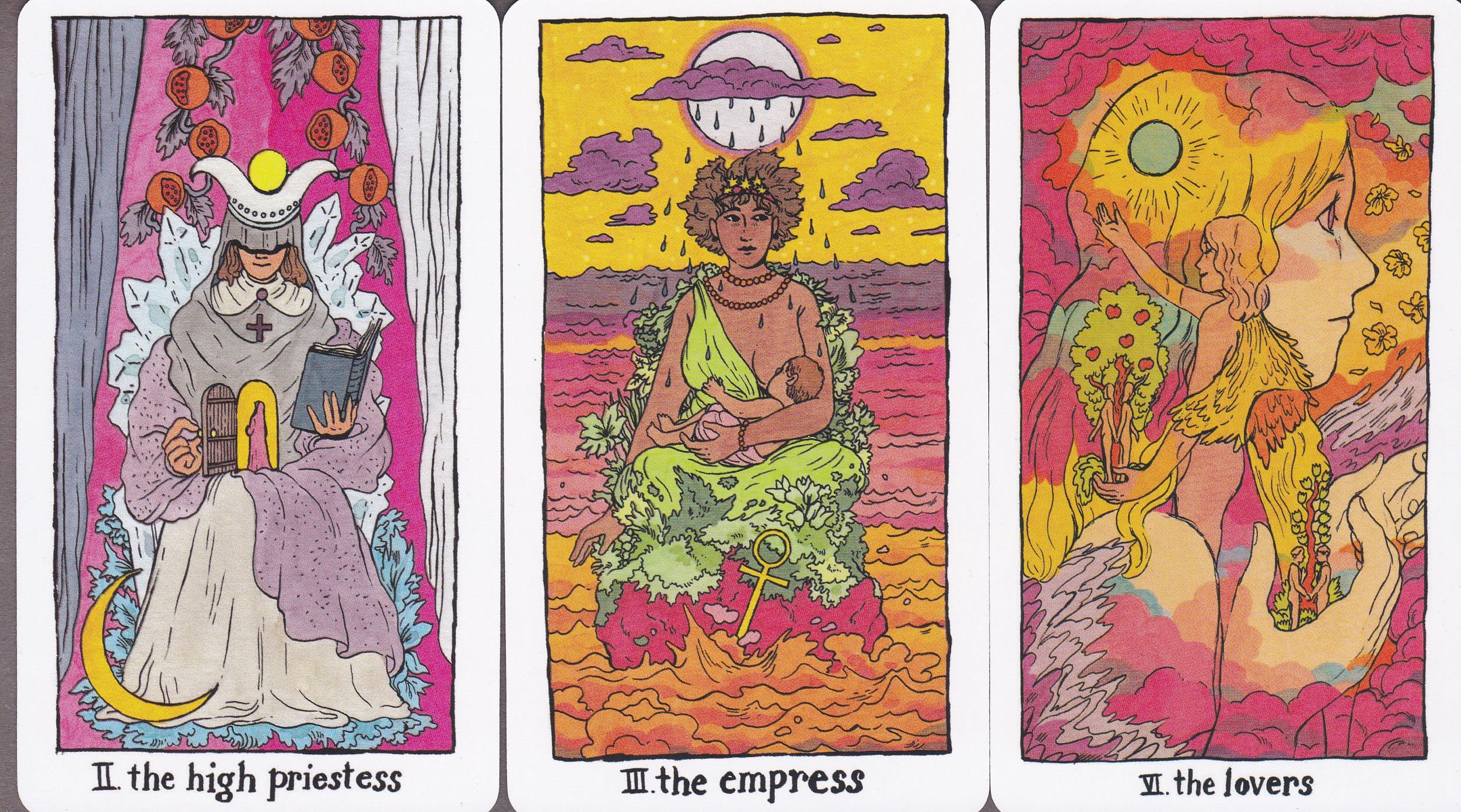

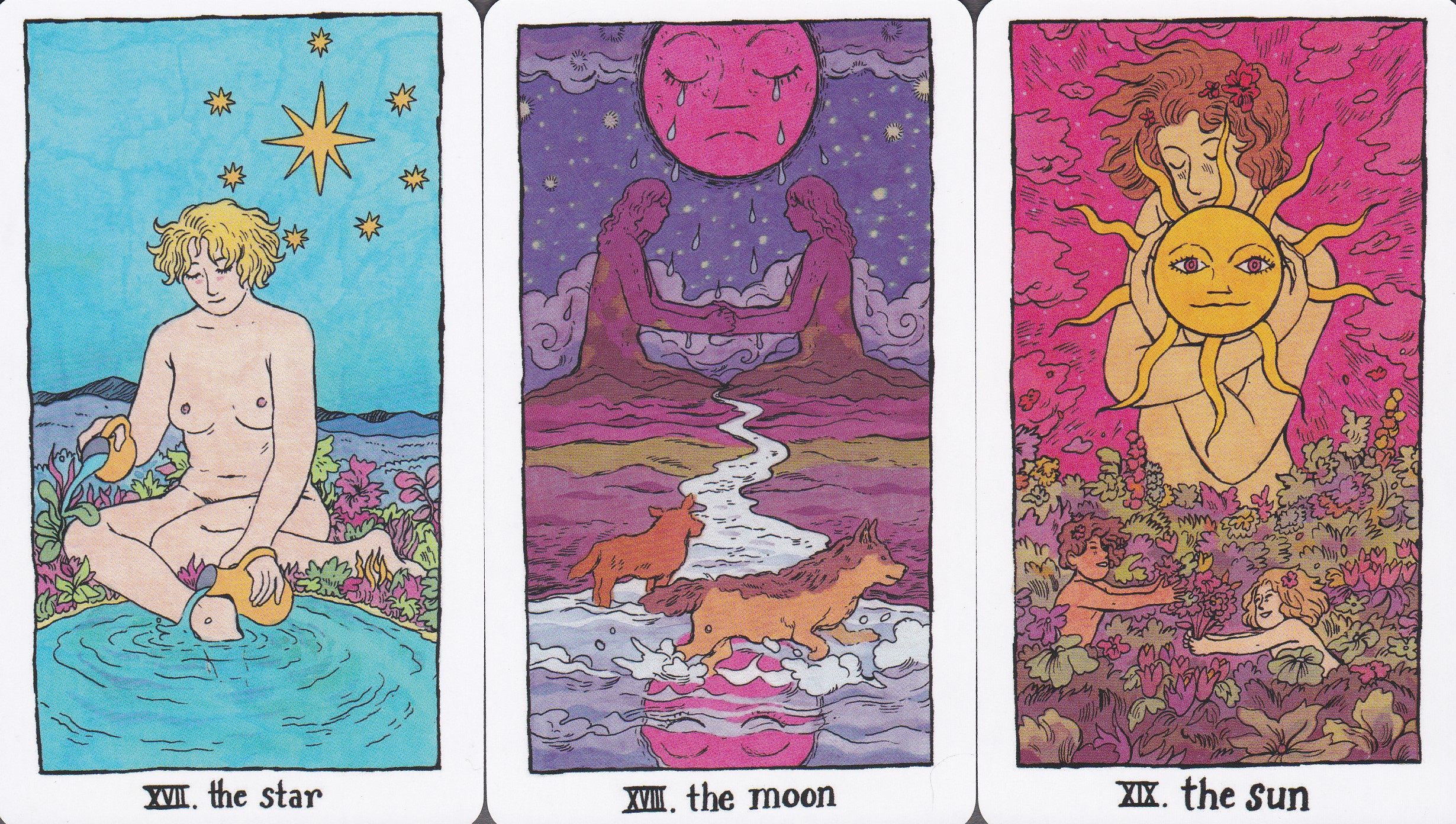
I would say that there is some kind of “diversity” in the deck, but I’m no longer sure, first, what that means as a term, and second, if it’s true. I will stake my life on the fact that the deck feels gorgeously, warmly feminine, but I wouldn’t bet five dollars on whether the Magician is male or female. The majority of the Trumps feel as though a female is depicted, but Walden has walked a fine artistic line. And I will admit a certain bias, a prejudice here. As I was looking through the cards, soaking up this incredibly feminine energy and really loving every minute of it, I decided that the guidebook was probably going to disappoint me. Why? Because I felt that this deck was aimed primarily at quirky young white women with a diverse friend group, a couple of painful ex-girlfriends, and an old, knitted beanie somewhere in the back of the closet. With this in mind and having only recently read as much as I could stand of The Motherpeace Tarot Guidebook by Karen Vogel, I expected the cards and the guidebook to be a bit…or more than a bit…misandrist. I must apologize for how wholeheartedly wrong I was.
Walden’s guidebook, a minute hardcover typical of Liminal 11 productions, is just as warm, open, and welcoming as her cards, and I cannot praise her enough for this. I hate to say it again, but it does bear repeating: I needed this little book now. Because I am so inwardly focused most of the time, I never really read tarot for myself, but I think I may start with this deck. I have mentioned in other reviews how reading is a chance to connect with other people, and I like this aspect of the practice, but this deck and this guidebook are written almost completely in the second-person, and they are both so inclusive—not in the current, sometimes pejorative political sense, but in the most loving and accepting way—that I may have to start reworking the meanings of some cards with which I have become entirely too comfortable. With a card like the oft-maligned Emperor, Walden writes, “The Emperor is an authority you can trust.” She continues positively, as she does with so many cards, that “The Emperor has no shame about armor and shields…the Emperor has no room for shame. He wants to see you in the world as your strongest self” (14). Walden’s style in the guidebook veers away from divinations in favor of these types of meditations and affirmations, and I am here for it.
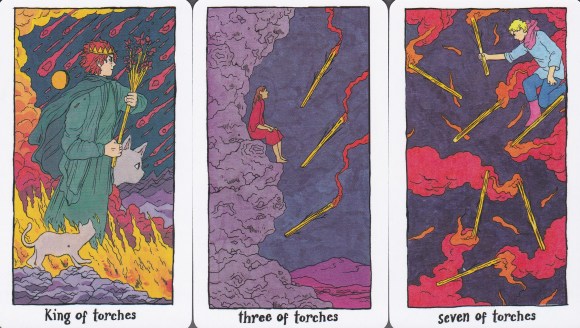
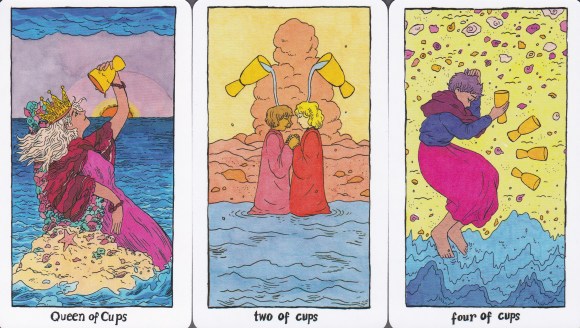
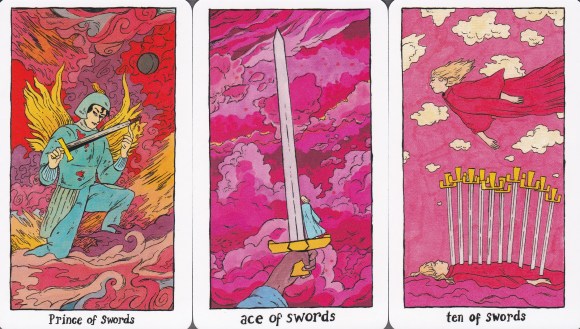
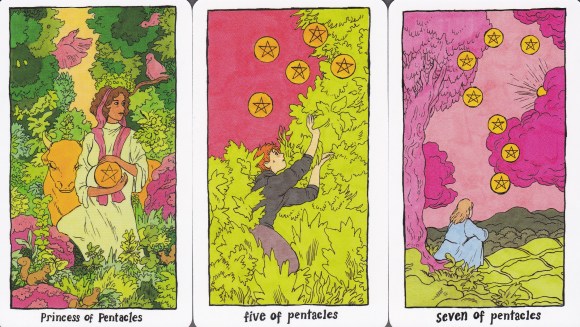
Are there any downsides to the deck? That depends on what a practitioner considers a “downside.” There are several cards that, upon first run through, do not adhere greatly to the RWS system so many tarotists practice, and even for intuitive readers, I suspect there may be some curious glances as they determine what exactly is being conveyed. In some cases, the cards can be rather vague. For example, the Three of Torches (Wands) depicts a young woman on an impossible cliff watching three torches as they descend before her. This is not the staunch young voyager of the RWS Three of Wands. Or is it? Walden’s description of the young woman meditating on the mountain as lit torches fall sounds very similar to the traditional definition: “Maturity and calm. You are prepared for what is coming. Do not give in to impulsiveness.” Is this what is depicted in the card? Yes—if you read it that way. And there are a few cards like that, where the meaning given by Walden is a generally positive affirmation of a more traditional definition, but the image must be looked at through that lens. Additionally, the deck includes two new cards, “The Morning” and “The Night,” to accentuate the somnolent theme. I don’t know if I will work with them or not, but I like that they are there.
There are so many more aspects of the deck that I could delve into, like the Court cards, a more extensive look at suit color schemes, or an extended comparison of the Lovers and the Devil, but I won’t. I will simply end with this: Thank you, Tillie Walden. Your take on the cards has truly enriched my experience with the medium, and your relentless and needed positivity in the guidebook was just what this grizzled old dude needed. I will sleep better tonight because of your contribution to the world of tarot.
 The Tarot King of Mississippi